
The Oil Acne-Prone Skin Is Actually Missing
A pure, five-ingredient proprietary oil blend formulated to give drier acne-prone skin exactly the oil it needs — and nothing it doesn’t.
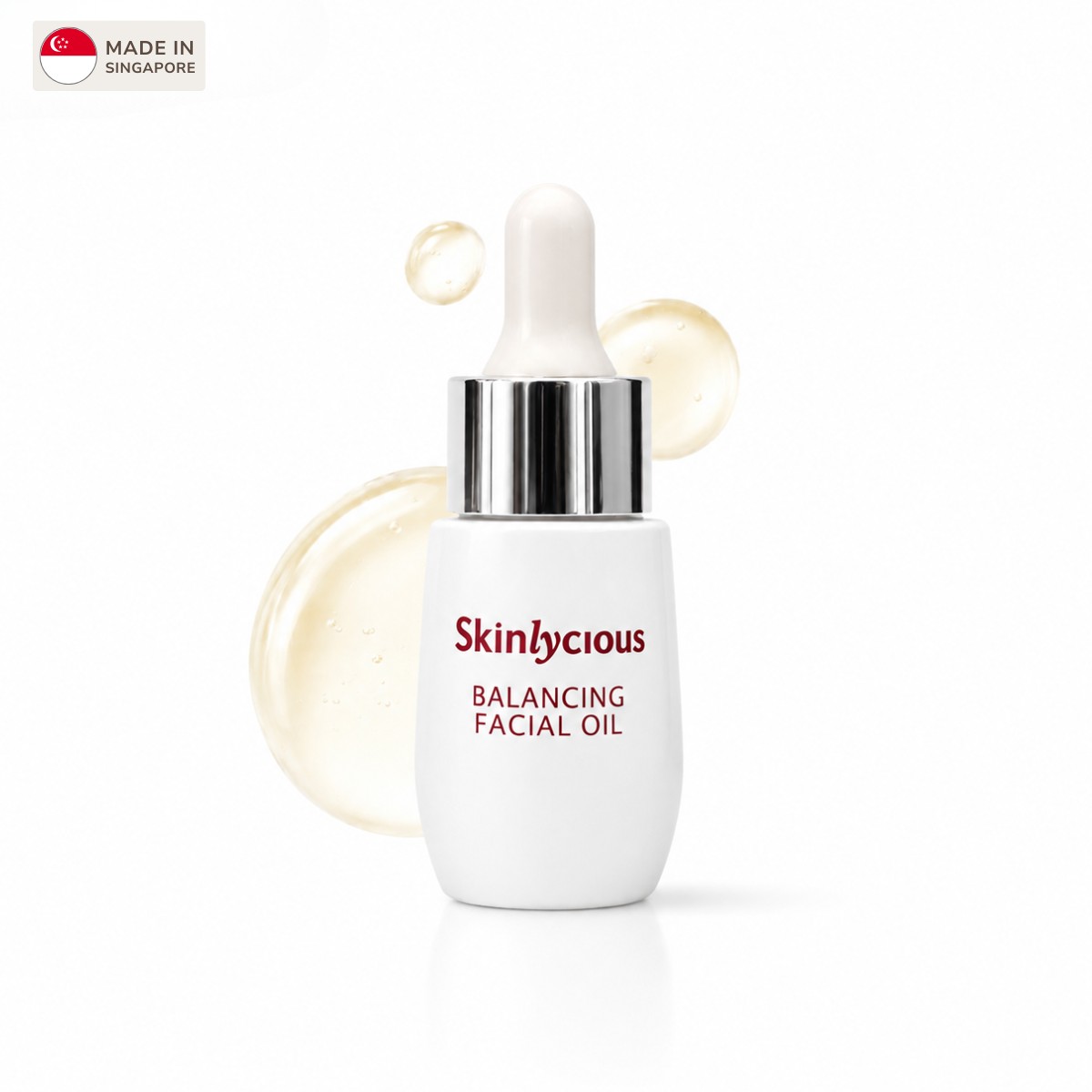
Balancing Facial Oil
S$35.00
Drier Acne-Prone Skin
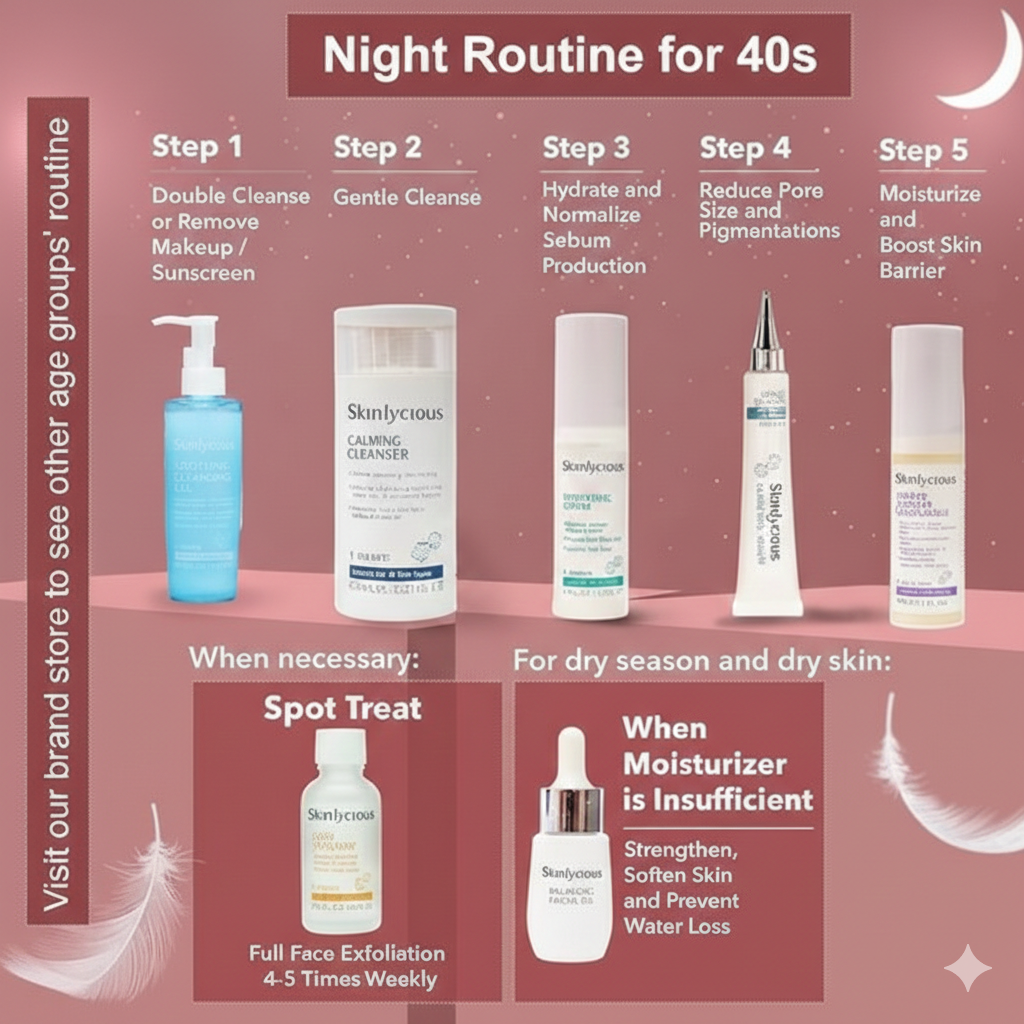
More oil when Barrier Booster alone isn’t enough
Cold Climate / Winter
Dial up your oil level in drier seasons
Any Skin That Wants a Natural Glow
Antioxidant-rich oils for smooth, radiant skin
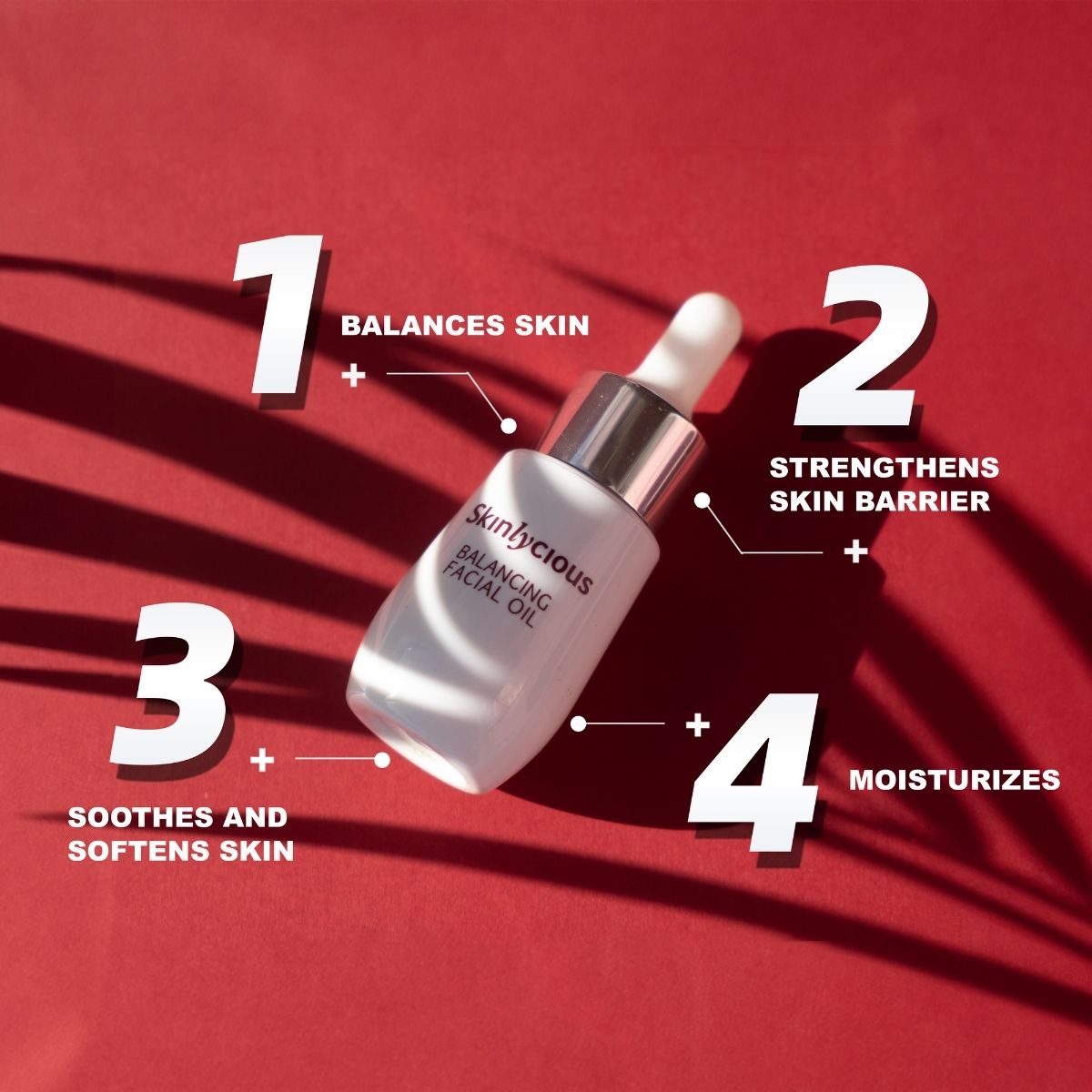
Moisturises, Strengthens and Supports Skin Barrier
In stock





Formulated without Essential Oils, Synthetic Fragrances/Colorants, Parabens, Phthlates, Sulfates, Formaldehydes.
Real Skin Transformations
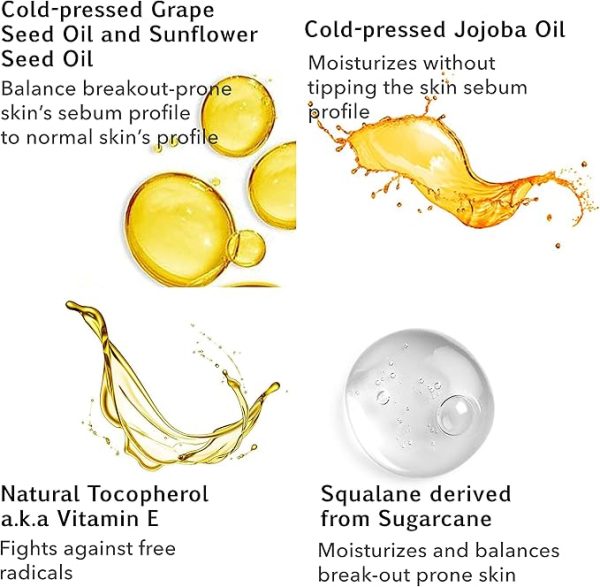
• Cold-Pressed Grape Seed Oil + Sunflower Seed Oil
The linoleic acid backbone of the formula. Studies consistently show that acne-prone skin is deficient in linoleic acid in its sebum — and compensates by overproducing oleic acid instead, which thickens sebum, clogs pores, and feeds acne-causing bacteria. Grapeseed Oil is over 70% linoleic acid. Sunflower Seed Oil is similarly rich. Applied topically, these oils help normalise the skin’s lipid profile — not just moisturise the surface. Cold-pressed to preserve their antioxidant potency and fatty acid integrity.
Why not coconut oil, avocado oil, or argan oil? These popular oils are high in oleic acid — the very fatty acid that acne-prone skin already has too much of. They can worsen congestion, contribute to the thick sticky sebum that clogs pores, and feed acne-causing bacteria. Linoleic-rich oils are the right choice for acne-prone skin. Oleic-rich oils are not.
• Cold-Pressed Jojoba Oil
Technically a liquid wax, not an oil — which is what makes it uniquely suited to acne-prone skin. Jojoba’s structure closely mirrors the skin’s own natural sebum, so it absorbs readily, moisturises without tipping the skin’s oil balance, and does not contribute to the linoleic/oleic imbalance. Rich in antioxidants and naturally long-lasting, cold-pressed Jojoba rounds out the blend with nourishment that feels like the skin’s own.
• Squalane (Derived from Sugarcane)
Squalane is naturally found in healthy skin’s sebum — it’s one of the lipids your skin produces to stay moisturised and protected. The source matters. Olive-derived squalane can contain trace impurities including phytosterol esters and fatty acids that may cause issues for sensitive or acne-prone skin. Skinlycious uses sugarcane-derived squalane, produced via bio-fermentation to approximately 99% purity — with minimal residual impurities. It’s lightweight, non-comedogenic, and absorbs quickly without leaving a heavy or greasy feel. A skin-identical ingredient that adds hydration and helps the barrier stay strong.
• Natural Tocopherol (Vitamin E)
A powerful fat-soluble antioxidant that does two things simultaneously. On the skin: it moisturises, soothes, and protects against free radical damage from UV, pollution, and environmental stressors — contributing to the long-term glow and anti-aging benefits of the formula. In the formula: natural Tocopherol acts as a natural preservative for the oil blend, protecting the linoleic-rich oils from oxidising. Why natural Tocopherol and not synthetic? Natural Vitamin E (d-alpha-tocopherol) has been shown to be more bioavailable and more effective as an antioxidant than its synthetic equivalent (dl-alpha-tocopherol).
A note on cold-pressing: Cold-pressing preserves the oils’ natural antioxidants, polyphenols, and fatty acid profiles. Heat extraction — used in cheaper, refined oils — can damage these beneficial compounds and reduce efficacy. Every oil in this blend is cold-pressed.
Balancing Facial Oil was never meant to be a product.
It began as the oil component Jasmine was developing for Barrier Booster Moisturiser. To understand plant oils properly before choosing any, Jasmine enrolled in a Diploma in Organic Skincare Formulation — determined not to choose ingredients based on trend or availability, but on what acne-prone skin actually needs.
That’s where she found the science: acne-prone skin is deficient in linoleic acid in its sebum — and compensates by overproducing oleic acid, which worsens congestion and feeds acne-causing bacteria. The solution wasn’t to avoid oils — it was to choose the right ones. She built a proprietary blend of Grapeseed, Sunflower, and Jojoba oils, plus sugarcane-derived Squalane and Vitamin E. To that, she added the skin-identical ceramide complex to support the barrier — something acne-prone skin is also consistently deficient in. That combination became Barrier Booster Moisturiser.
Then she ran a trial. Ten customers who had reported tightness after Hydrating Serum were enrolled. Jasmine prepared three samples — A, B, and C — identical in every way except for the concentration of the proprietary oil blend. She wanted to find the ideal percentage: enough oil to relieve dryness, but not so much that it would increase the risk of congestion.
She knew she needed to formulate an oil-based moisturiser. But she also knew that getting the wrong oils wrong could clog pores and break customers out. So before she chose a single ingredient, Jasmine enrolled in a Diploma in Organic Skincare Formulation to understand the plant oil world properly before making any decisions.
Then she ran a trial. Ten customers who had reported tightness after Hydrating Serum were enrolled. Jasmine prepared three samples — A, B, and C — identical in every way except for the concentration of the proprietary oil blend. She wanted to find the ideal percentage: enough oil to relieve dryness, but not so much that it would increase the risk of congestion.
The result: no clear winner. All ten testers came back with different preferences. Some preferred Sample A. Others preferred B or C. It was the moment Jasmine understood that everyone has a different degree of dryness — and no single concentration would work for everyone.
She made the decision to launch the lower oil concentration as Barrier Booster Moisturiser — because too much oil, even linoleic-rich oil, increases the risk of pore congestion. For customers who need more, the proprietary oil blend was launched separately as Balancing Facial Oil — so every person can dial in the exact oil level their skin actually needs. This is how the Skinlycious water-and-oil balance system was born: not from theory, but from ten different people telling Jasmine ten different things.
Vitis Vinifera (Grape) Seed Oil*, Squalane (derived from Sugarcane), Simmondsia Chinensis (Jojoba) Seed Oil*, Natural Tocopherol (Vitamin E), Helianthus Annus (Sunflower) Seed Oil *cold-pressed
Formulated without: Essential Oils, Synthetic Fragrances/Colorants, Parabens, Phthalates, Sulfates, Formaldehydes.
After Hydrating Serum and Barrier Booster Moisturiser
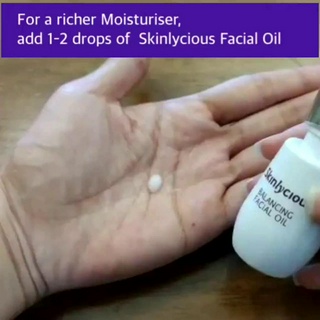
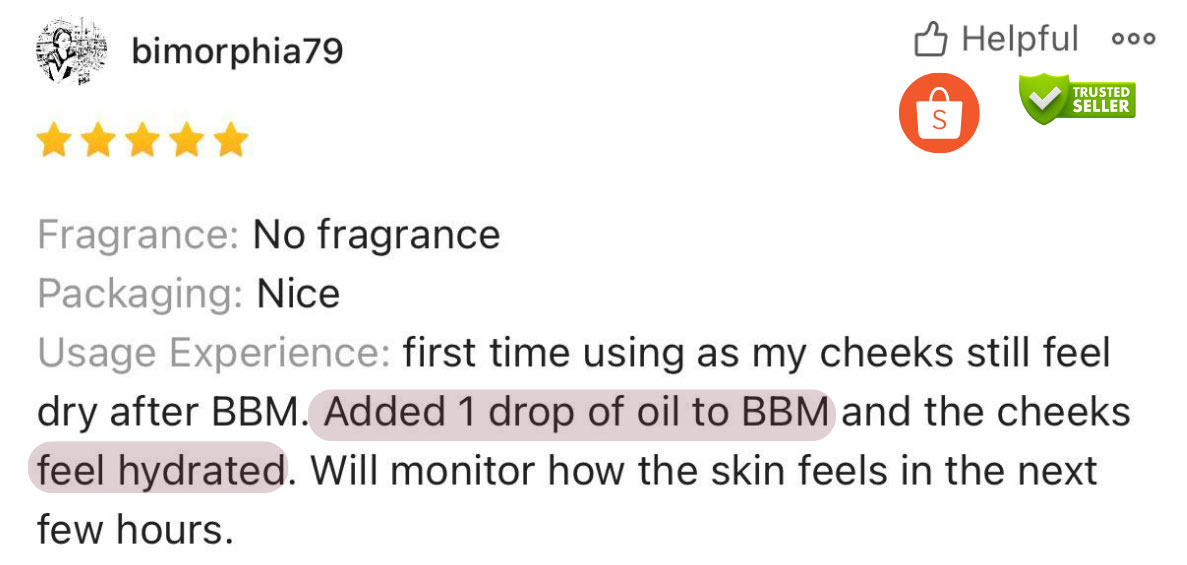
Apply Hydrating Serum and Barrier Booster Moisturiser first. Then, if your skin still feels like it needs more oil, warm 1–2 drops of Balancing Facial Oil in your palms and pat gently over the face and neck. Alternatively, add 1–2 drops directly into your Barrier Booster Moisturiser in your palm, mix, and apply together for a seamlessly blended result.
Apply Only Where Your Skin Needs It
Like Barrier Booster, Balancing Facial Oil is not a full-face requirement for everyone. Apply it only to areas that feel like they need more oil after moisturising — typically drier zones like the cheeks, chin, or neck. If your skin feels comfortable after Barrier Booster alone, you may not need the oil that day. If your skin feels tight during the day, note which areas and apply more oil at your next skincare routine on clean skin.
Adjust to Your Skin’s Needs and Season
Start with 1 drop and adjust. In Singapore’s humidity, most people need very little additional oil after Barrier Booster — sometimes none. In colder climates, air-conditioned environments, or winter, your skin will likely need more. Tightness, flaking, or dullness are the signals to increase.
Description
AS FEATURED IN


Hear from our Happy Customers
Personalised Moisture Balance
Find Your Perfect Water and Oil Balance.
Every moisturiser decision you’ve ever made — too greasy, too heavy, broke me out, not enough — comes down to one thing: the balance between water and oil in your skin.
Your skin needs both. Water keeps cells plump, resilient, and balanced. Oil seals that water in and protects the barrier. When that ratio is right for your skin type, the visible signs of imbalance — rough texture, frequent breakouts, reactive sensitivity — have less reason to show up.
It overproduces oil to compensate — causing oilier skin, clogged pores, and breakouts. Oily skin is often dehydrated. Dehydrated skin can also flake and become reactive, even if it doesn’t feel dry.
It can’t hold onto moisture regardless of how much you apply. You’ll experience tightness, flaking, itchiness, and a weakened barrier — leaving skin vulnerable to skin issues like eczema. This is especially common in cold or dry climates.
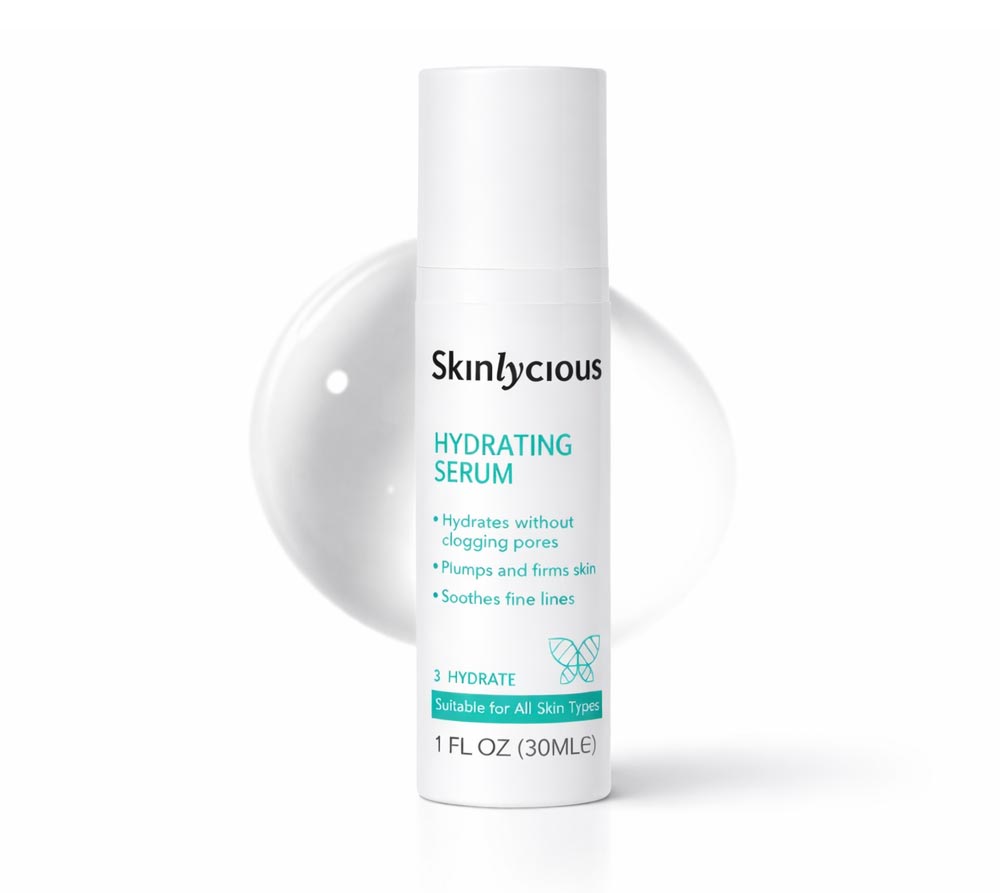
Hydrating Serum is the water layer — the essential first step that adds hydration into the skin. For oily skin or in humid weather, this alone is often enough. But if your skin needs more, Skinlycious lets you customise.
STEP 1
Hydrating Serum
Adds water into the skin. Enough for most oily skin.
Add-on (if needed)
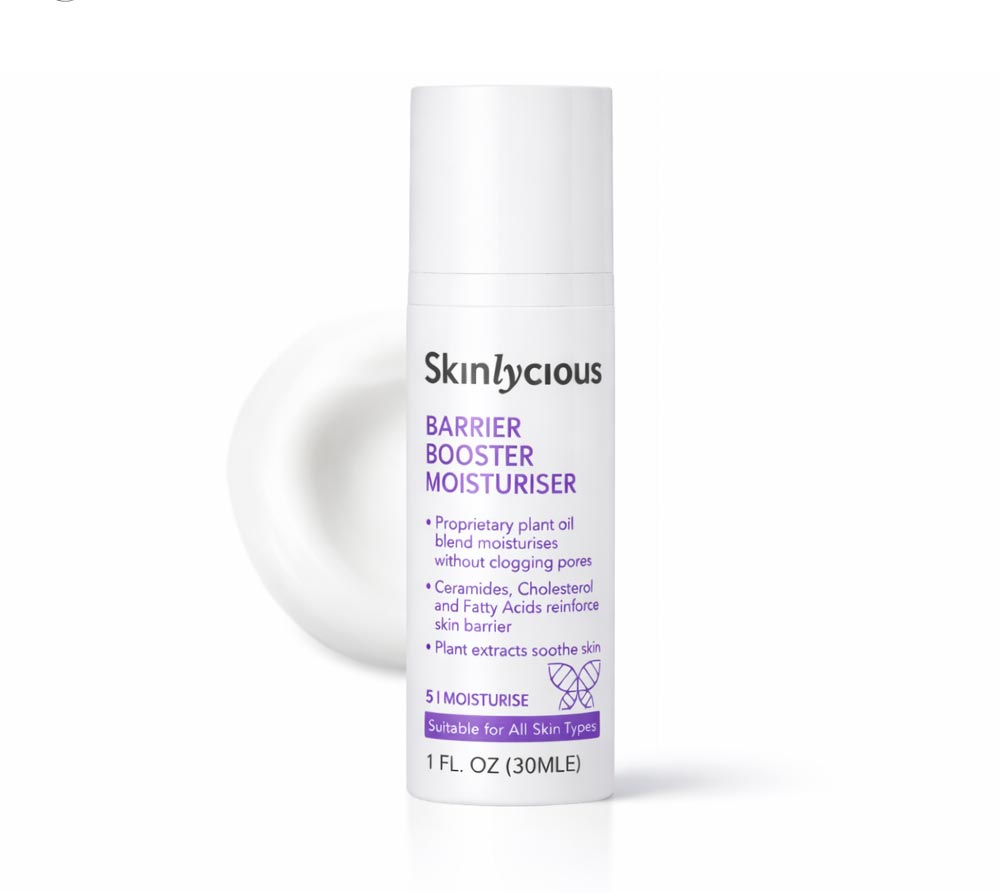
Barrier Booster Moisturiser
Adds oil. Seals moisture in. Barrier support.
Add-on (if DRY)
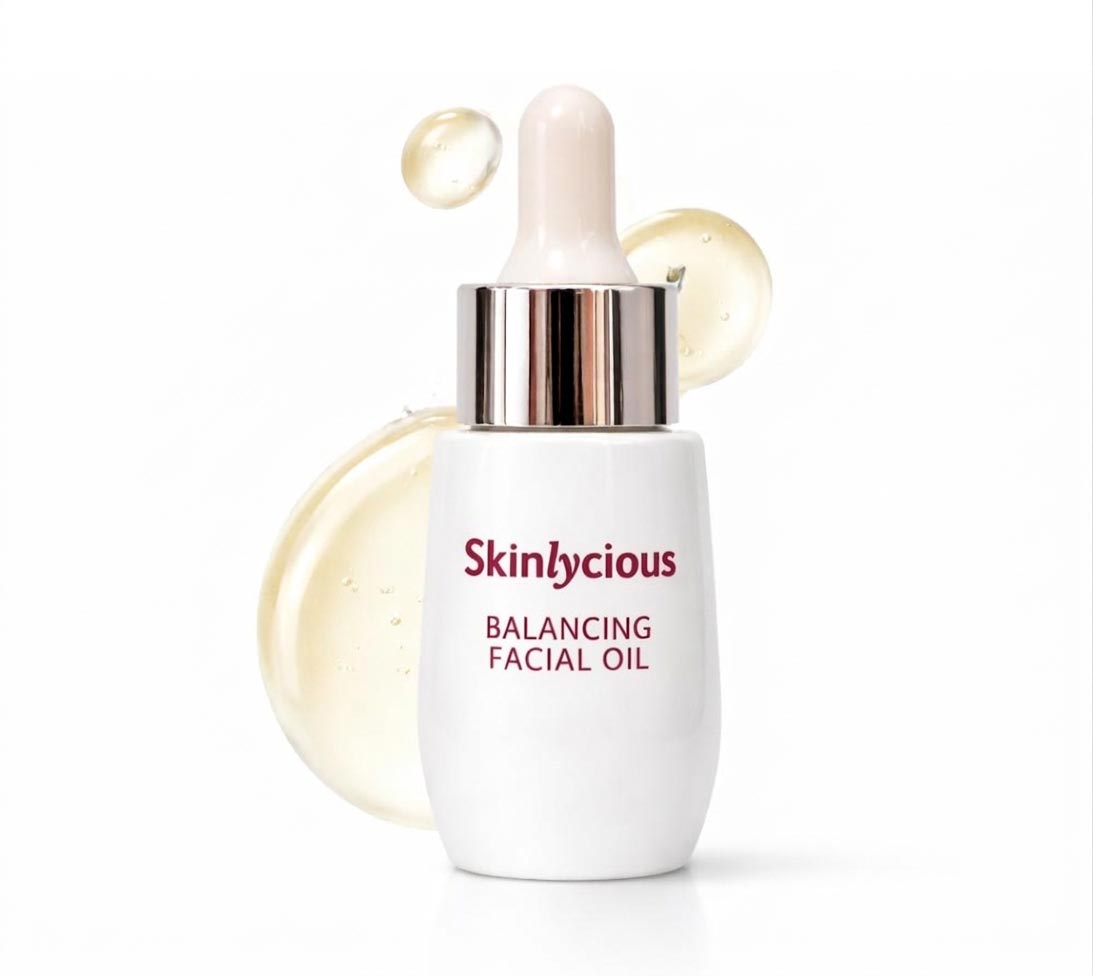
Balancing Facial Oil
Adds more oil. Further seals moisture in.
What Makes Balancing Facial Oil Different
3 Reasons This Oil Actually Works
Many facial oils are formulated with oils that are trending. They’re popular because they feel luxurious and work well for dry or mature skin. For acne-prone skin, many of them are the wrong choice.
The issue is oleic acid. Oils that are high in oleic acid — coconut, argan, avocado, marula — can thicken sebum, increase congestion, and feed the bacteria that cause breakouts. Acne-prone skin already has too much oleic acid. Adding more only worsens the imbalance.
Balancing Facial Oil is formulated around the opposite principle: oils high in linoleic acid and low in oleic acid. Grapeseed (over 70% linoleic), Sunflower Seed, and Jojoba — chosen not for trend, but because the research on acne-prone skin’s lipid deficiency points directly to them. This is the oil blend acne-prone skin is actually deficient in.

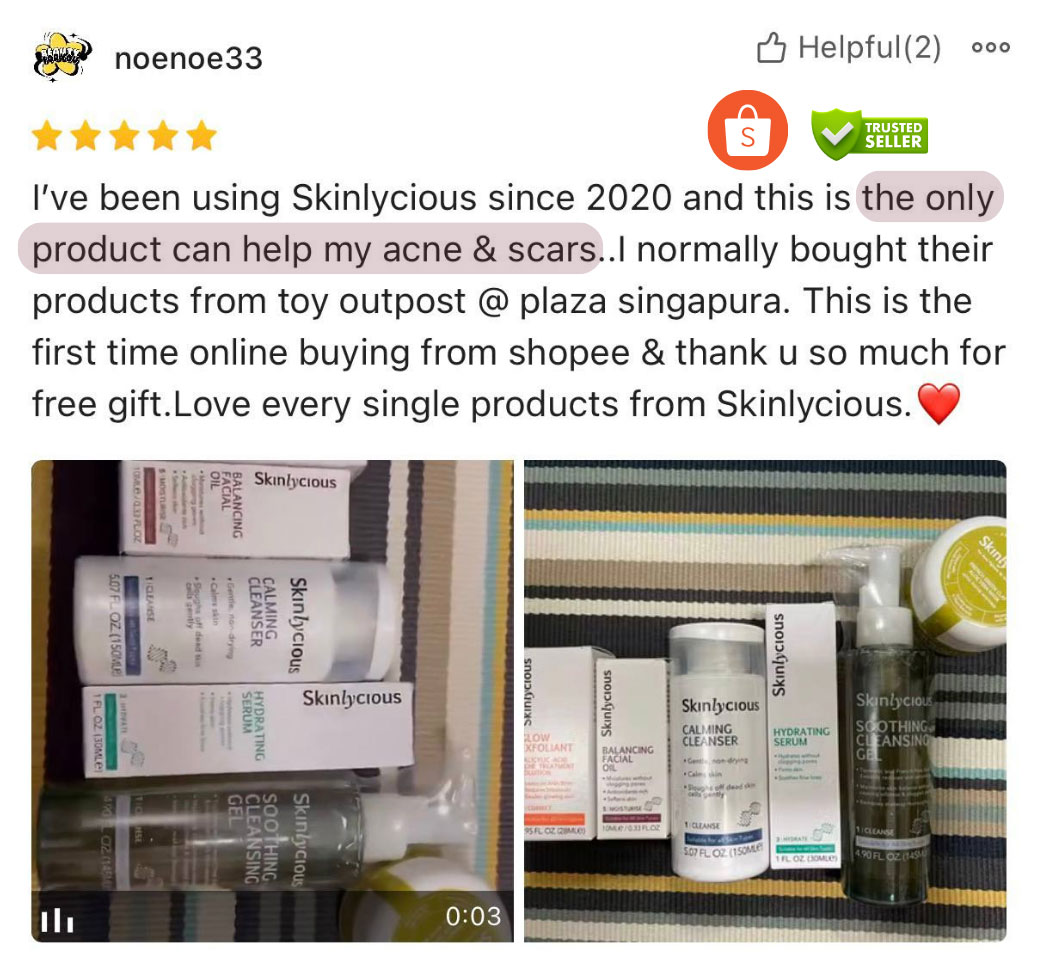
Squalane is one of the lipids naturally produced in healthy skin’s sebum. It’s lightweight, non-comedogenic, and helps the barrier stay strong. It’s also one of the most commonly found ingredients in facial oils — but not all squalane is equal.
Squalane can be derived from several sources. Olive-derived squalane — the most common — is obtained as a by-product of olive oil refining, and may contain trace impurities including phytosterol esters and fatty acids that can cause issues for sensitive or acne-prone skin. Sugarcane-derived squalane, produced via bio-fermentation, reaches approximately 99% purity — with minimal residual impurities. Cleaner starting material. More predictable results for reactive skin.
Skinlycious uses sugarcane-derived squalane specifically. It’s the choice that aligns with what acne-prone and sensitive skin needs: the moisturising and barrier-supporting benefits of squalane, with the lowest possible risk of impurity-related congestion or irritation.
The ten-person trial for Barrier Booster Moisturiser showed something Jasmine didn’t expect: no single oil concentration worked for everyone. Every tester had a different degree of dryness and needed a different amount of oil. A fixed formula couldn’t solve an individual problem.
Balancing Facial Oil is the answer to that insight. By keeping the oil blend as a standalone product, you can add exactly as much or as little as your skin needs — one drop or three, mixed in or layered on, used every day or only in winter. The formula doesn’t change. Your routine does, based on what your skin is telling you.
This is what separates the Skinlycious moisture system from a standard moisturiser: it’s not a fixed product you apply the same way every day. It’s a customisable oil layer that adapts to your skin, your climate, and your life.

Real People. Personalized Results.
Discover how others with similar skin struggles found their clear skin solution.
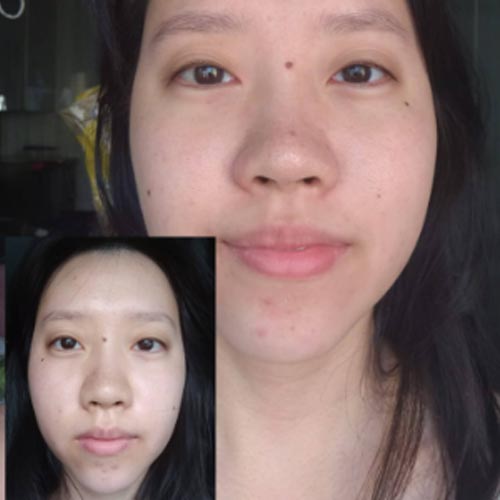
Oily to balanced skin
★★★★★
“I have oily skin with mild acne, especially on my nose. The starter kit improved my skin, with the hydrating serum being my favorite—it’s not sticky, hydrates perfectly, and helped my skin feel more normal and stable”
— Anna
See full review on Youtube →
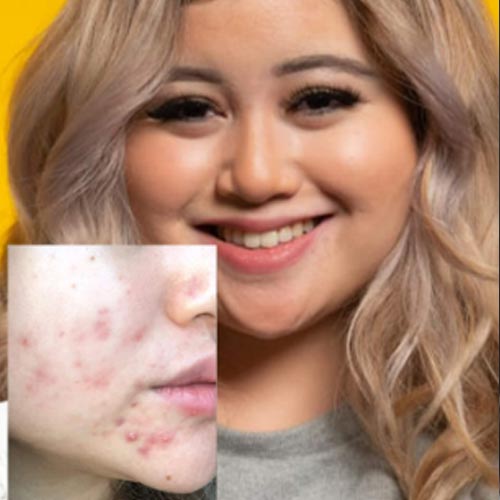
Perfect moisturizing balance
★★★★★
“Despite having really oily skin, I learned that moisturizing is essential. This Hydrating Serum does exactly the right amount of moisturizing for me without being too much.“
Andie
See full review on Youtube →
No More Antibiotics
★★★★★
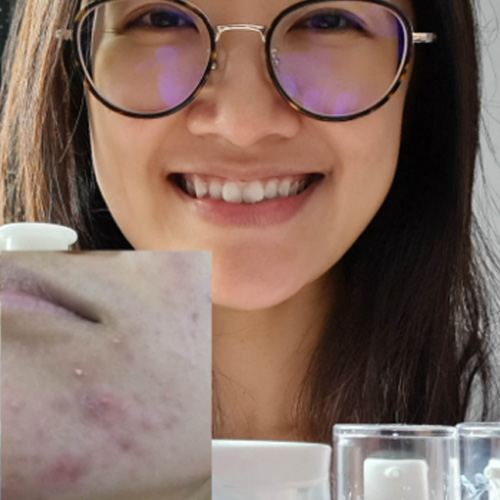
“Struggled with acne since my teens. Antibiotics were expensive and unsustainable. After using the starter kit, my skin was softer and smoother—even my colleagues noticed the improvement!“
Joanne
See full review on Youtube →

Visible results in weeks
★★★★★
“I started with the Starter Kit and saw a big difference after 2.5 weeks. The Hydrating Serum has been my go-to and actually helps reduce the excess sebum on my face.”
Vanessa
See full review on Youtube →
Why Us vs. Everyone Else
|
Skinlycious
Balancing Facial Oil 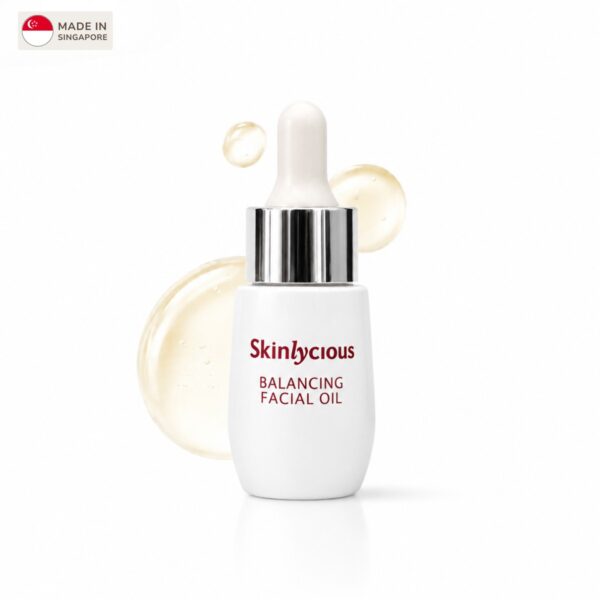
|
Most
Facial Oils 
|
|
✓
Oils chosen for acne-prone skin’s linoleic acid deficiency — high linoleic, low oleic — cold-pressed Grapeseed and Jojoba
|
×
Often oleic-dominant oils (argan, avocado, coconut) that can worsen congestion for acne-prone skin
|
|
✓
Sugarcane-derived Squalane ≈ 99% pure via bio-fermentation — minimal impurities for sensitive skin
|
×
Often olive-derived squalane, which may contain trace impurities that affect sensitive skin
|
|
✓
Key oils cold-pressed — preserving antioxidants, polyphenols, and fatty acid integrity
|
×
Many use heat-extracted refined oils — cheaper but less potent
|
|
✓
Free from essential oils, fragrance, and common allergens — suitable for the most sensitive skin. Vegan.
|
×
Many facial oils contain essential oils or fragrance that irritate acne-prone or reactive skin
|
|
✓
Designed to work with a layerable moisture system — mix into Barrier Booster or use alone to dial in your exact oil level
|
×
Standalone products without a supporting water-oil balance system
|
|
✓
Co-developed with real people with acne-prone, oily-prone, sensitive skin
|
×
Generic formulas created in labs without real-world input from problem skin
|
Frequently Asked Questions
Good Questions, Straight Answers
This is the right question to ask — and the answer depends on which oils. Many facial oils are high in oleic acid, which can worsen congestion and feed acne-causing bacteria for breakout-prone skin. Balancing Facial Oil uses oils that are high in linoleic acid and low in oleic acid — Grapeseed, Sunflower, and Jojoba — which are specifically beneficial for acne-prone skin’s lipid deficiency. Squalane from sugarcane is non-comedogenic with a pore-clogging rating of 0–1. That said, how much you use matters: even the right oils can contribute to congestion if over-applied. Start with 1 drop and adjust based on how your skin feels.
Yes — they do different things. Barrier Booster Moisturiser contains ceramides, Cholesterol, Fatty Acid, Panthenol, Saccharide Isomerate, and botanical extracts — a complete formula that reinforces the skin barrier from within. Balancing Facial Oil is the pure oil blend on its own, used to add more oil when Barrier Booster alone isn’t enough. Barrier Booster first, Facial Oil after — or mixed together in the palm.
Yes. Hydrating Serum adds water to the skin — which is the foundation everything else builds on. Balancing Facial Oil adds oil, not water. Oil seals in hydration but cannot create it. Using Facial Oil without Hydrating Serum first means there’s less moisture to lock in.
Squalane can be sourced from several plants, but the source affects purity. Olive-derived squalane — the most common — can contain trace impurities including fatty acids and phytosterol esters that may cause issues for sensitive or acne-prone skin. Sugarcane-derived squalane is produced via bio-fermentation to approximately 99% purity — a cleaner result with minimal residual impurities. For skin that’s already reactive, that difference matters.
Start with 0.5 to 1 drop and see how your skin responds. If it still feels like it needs more oil, add another drop. Apply to the whole face or only to areas that feel dry after Barrier Booster. In Singapore’s humidity, most people need 1–2 drops at most. In colder or drier climates, you may need more. Let your skin tell you — not the instructions.
Yes — this is one of the most popular ways to use it. Add 1–2 drops of Balancing Facial Oil to Barrier Booster in your palm, mix together, and apply. This gives a lighter combined feel than layering and lets you blend your oil level seamlessly into one application step.
Yes — free from essential oils, synthetic fragrances, and common allergens. For teens who typically have oilier skin, it’s likely only needed in drier zones or during winter. The tight-feeling test applies: if a zone feels dry or tight after Hydrating Serum and Barrier Booster Booster, that’s the signal to try a drop here.
All Skinlycious products are made in a certified GMP facility in Singapore, rigorously lab-tested, and notified with the US FDA, HSA, and NPRA.
Just give us 1-2 working days to prepare your order once you have placed your order and another 1-2 working days for the courier to deliver.
Do note that we don’t work on weekends and on Singapore’s Public Holidays.
To develop the Barrier Booster moisturiser, Jasmine wanted to use some plant oils. To understand natural ingredients better, Jasmine specially took a diploma in organic skincare formulation.
After researching on the types of oil that is beneficial for acne-prone skin, Jasmine tested and developed a proprietary oil blend (Skinlycious Balancing Facial Oil) that didn’t break her out. She then used this oil to formulate Barrier Booster Moisturiser.
There was no intention of launching a facial oil until some testers of Barrier Booster Moisturiser feedback that they needed a richer moisturiser. Jasmine sent them samples of the pure oil blend and asked them to mix 1 to 2 drops of oil with Barrier Booster Moisturiser and apply. Every tester found their own sweet spot. Hence, Balancing Facial Oil is born.










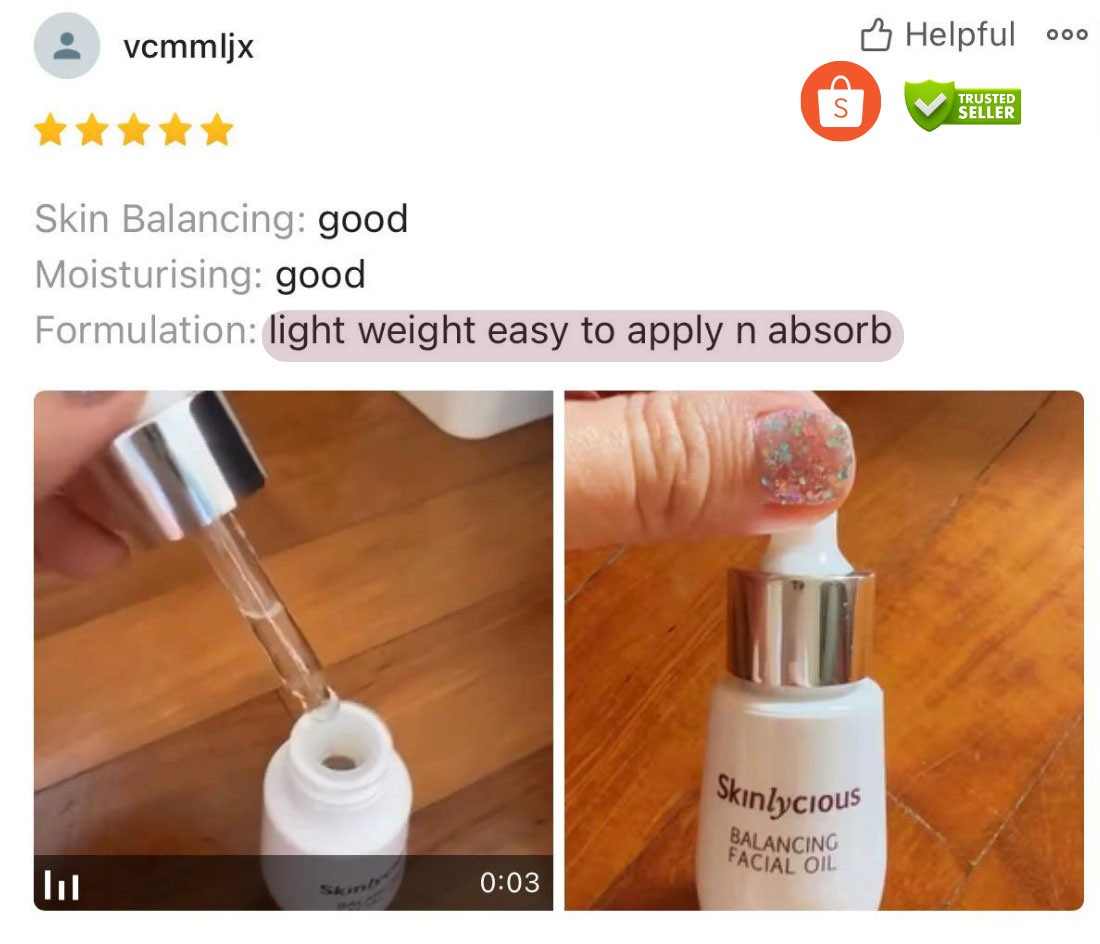
vcmmljx (verified owner) –
Skin Balancing:good
Moisturising:good
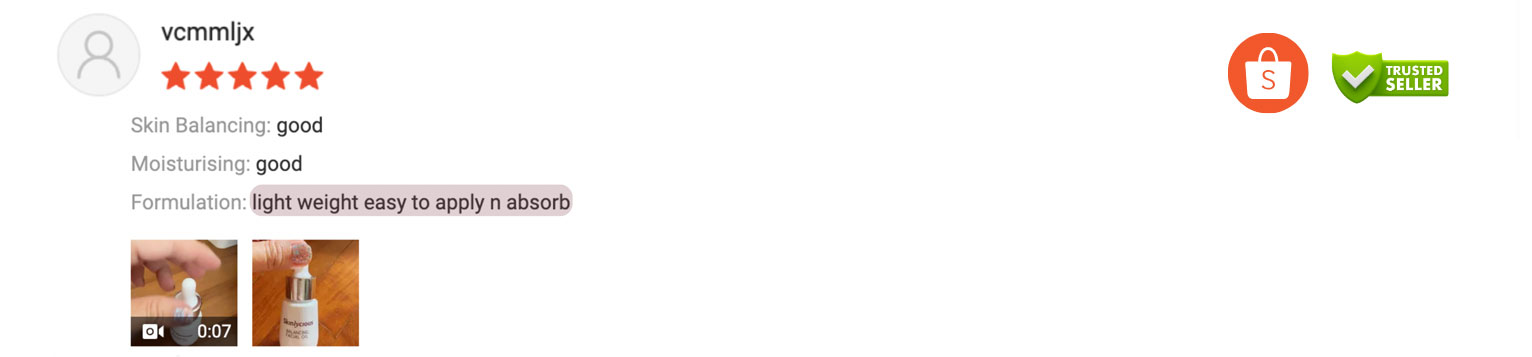
Formulation:light weight easy to apply n absorb
paulineliew76 (verified owner) –
Performance:Good
Formulation:Good
Suitability:Ok Received fast and in good condition. Bought it when live so can get the dics vouchers. Great that seller never increase the price.. will continue use it slowly see the result ^.^
alyssatan90 (verified owner) –
2nd purchase for this product. Affordable price compare to other brands
canpple (verified owner) –
Suitability:good Formulation:good Performance:good So eager to try out ALL the skinlycious products so I bought them all during the December sale since they are giving out free mini bundles! Will be good if seller can launch big size bundle set for the hydrator and moisturizer!
janetanpohgeok (verified owner) –
Item well packed and received.